The input was not a constructed sample. It was a live $2M seed deck from an energy-infrastructure software company — identity withheld pending the company's consent to publication.
What was on the table measured instance
The question in front of the operator was the standard screening question: should this deck advance to partner review? The deck was screened through the governed due-diligence pipeline described across this site — typed evidence, adversarial review, calibrated confidence, gated authority, and a full decision and execution record at the end. This page shows what one real pass through that pipeline looked like, and what it measured.
The governed-autonomy ladder — Evidence → Calibrated confidence → Gated authority → Full audit trail — is usually described in the abstract. In this run, each rung left a concrete, journaled mark.
Evidence
9 typed claims were extracted from the deck. 3 were flagged as contradicted; 1 — the company's live prototype URL — was independently verified. 3 cross-claim conflicts were detected deterministically, before any paid model call was made.
Calibrated confidence
A Red/Blue adversarial review argued the deck both ways, with integrity validation on the output (blue_role_adherent=true). Confidence was capped by what could actually be verified — a verification-capped screen, not a persuasion contest.
Gated authority
One cloud judge call ran under a $5 / 3-call fail-closed spend cap. The engine's authority ended at a recommendation: decision support only, with no autonomous investment action available to it.
Full audit trail
Every claim, conflict, verdict, gate, and spend event was journaled into a decision and execution record, released digest-bound to the human operator.
The replay below walks the screening run stage by stage — claim typing, deterministic conflict detection, the adversarial review, the judge call, and the gated release.
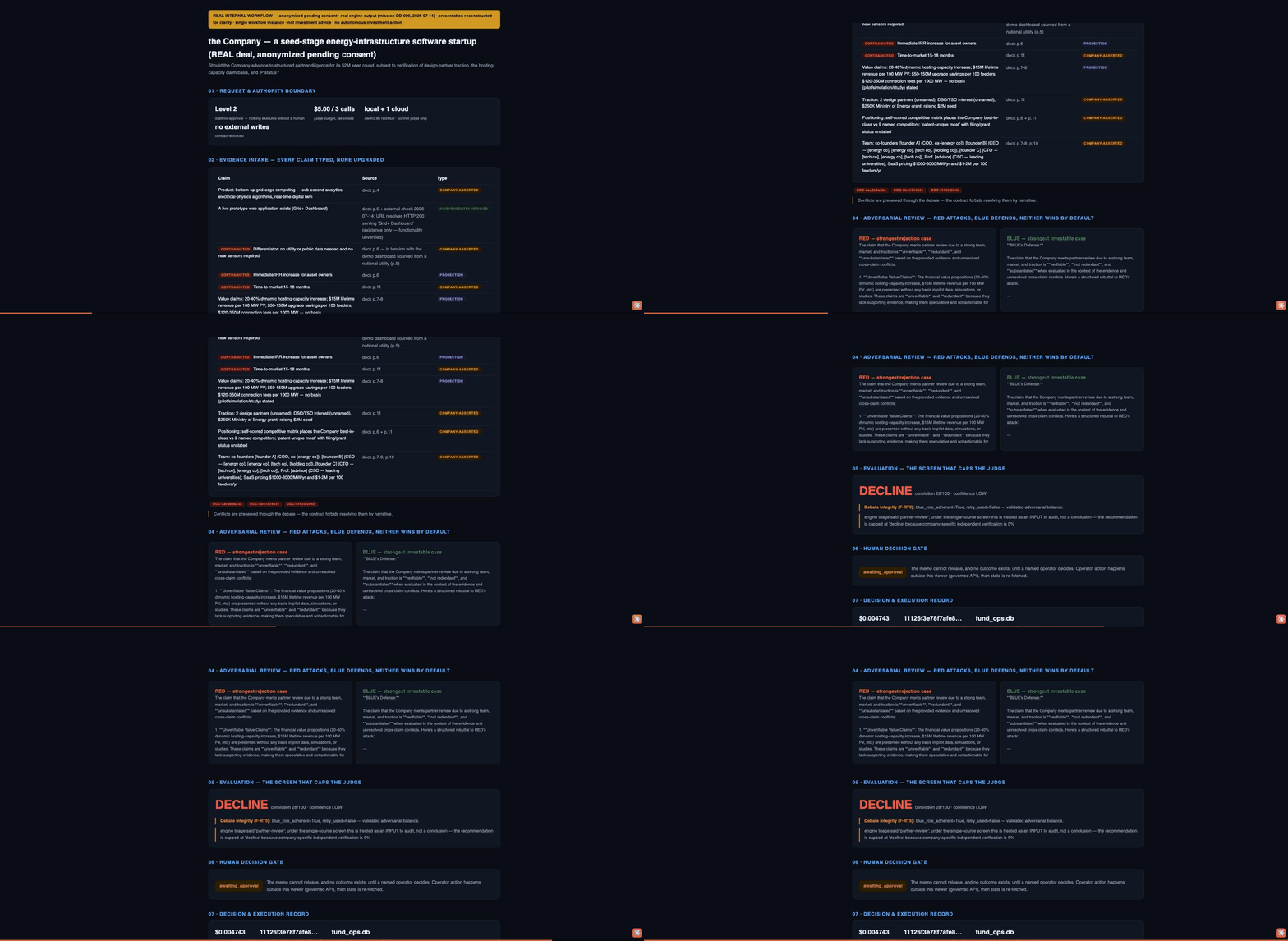
Annotated replay of the measured screening run. Real engine output; the presentation is reconstructed for clarity and anonymized for publication.
The screen did not produce a hedge. It produced a verdict, a capped confidence, the conditions that would change the picture, and a human decision on top.
The screen verdict measured instance
- Verdict DECLINE at the screen stage.
- Conviction 28/100 — support for the investable-thesis claim on the evidence before the screen (0 = contradicted, 100 = fully supported); confidence LOW, capped because company-specific independent verification was near zero at the deck-only stage. Two numbers, two meanings — never blurred.
- Conditions 9 verification conditions were journaled: the specific things that would need to be independently verified for the picture to change.
- Human gate The human operator reviewed the record and accepted the screen outcome. The release was digest-bound and journaled.
A decline is a feature here, not a failure. The system is not judged on flattering a deck; it is judged on producing a screening decision a reviewer can hold accountable — verdict, evidence, cap, conditions, and the human decision, all in one record.
The measured result single instance
The runs we refused to publish substantiated
During this engagement, the operator caught the adversarial-review component producing prosecution-formatted “defenses” — the defending side echoing the attacking side's format instead of doing its job. Three defective runs were refused for publication.
The platform was fixed, not the story: output validation on the adversarial roles, a governed retry, and operator-visible integrity flags — all with tests. The workflow was then re-run cleanly, and that clean validation re-run is what this page publishes.
The part that matters. The screen verdict was identical before and after the fix. The evidence cap decides the outcome — not the narrative quality of any single component.
Read the caveats before the number substantiated
- Internal workflow This is our own operating workflow, run by our own operator — not a customer case study.
- One instance A single measured run. Not an average, not a benchmark, not a guaranteed outcome.
- Deck-only evidence The screen stage worked from the deck and independently checkable signals. The deeper verification stage has not run.
- Anonymized The company's identity is withheld pending its consent; details that could identify it have been redacted.
- Decision support only The output is screening support for a human decision — not investment advice, and no investment action was taken by the system.
In a live walkthrough we run a governed workflow on representative inputs and show every rung of the ladder — and the decision and execution record it leaves behind.
Browse the demo library → Read the decision and execution record →